
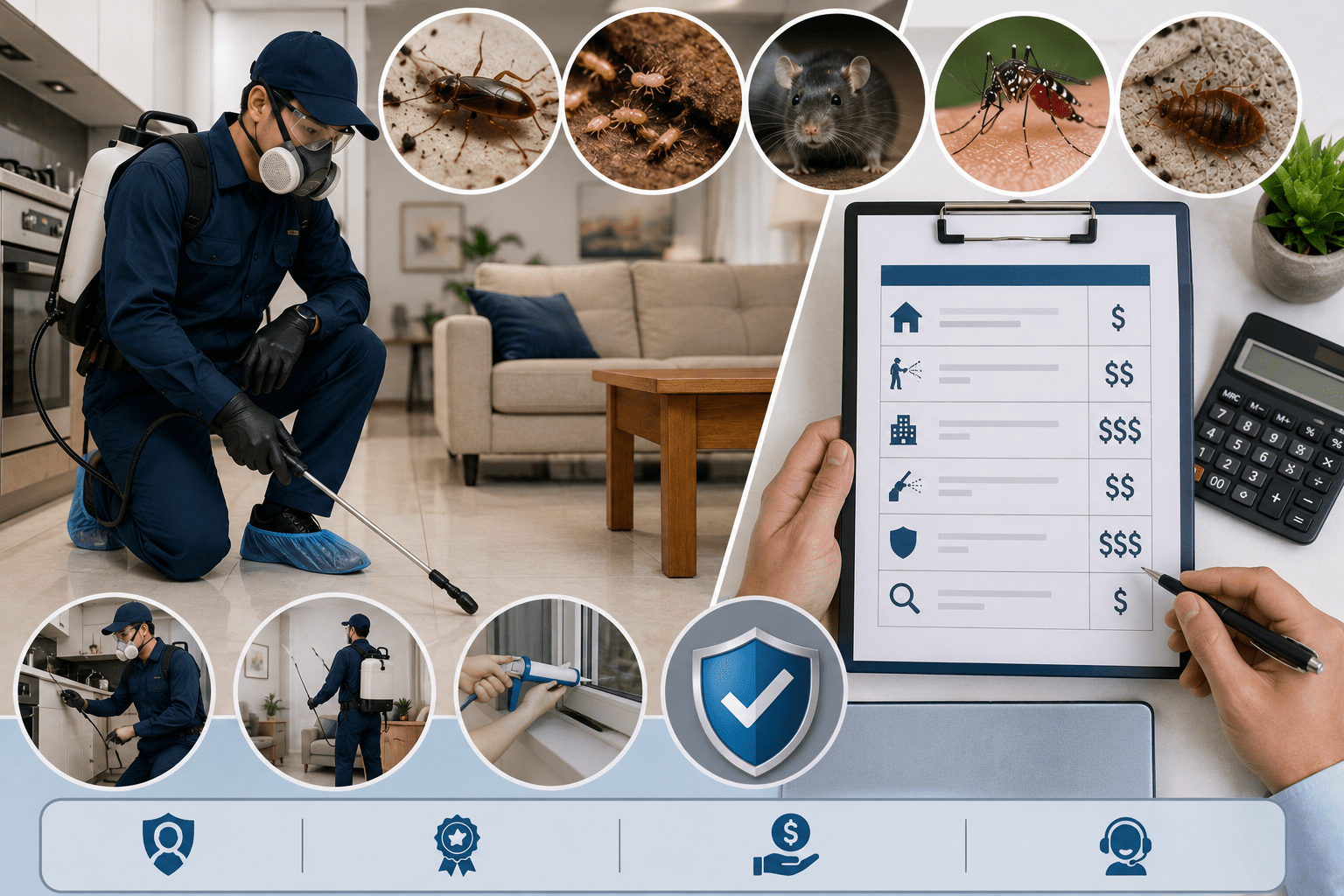
Pest Control Singapore Price Guide
If you’ve found yourself Googling “pest control Singapore price” at midnight because you just saw something scuttle behind your fridge, this is for you. You want to know what it’s going to cost before some salesperson shows up and quotes you a number with zero context. Fair enough. Here’s what’s actually being charged in 2026, broken down by pest, property type, and how bad things have gotten.
Table of Contents
- We can help you get rid of Pest fast.
Average Pest Control Prices in Singapore
For a standard HDB flat, a one-time general treatment runs $80 to $250. Landed properties cost more — usually $250 upward, sometimes significantly more if it’s a termite situation. Commercial spaces start around $150 per visit for small offices, and restaurants on monthly contracts typically pay $250 to $600 a month.
Service Type | Typical Price Range |
One-time treatment (HDB) | $80 – $250 |
One-time treatment (landed) | $250 – $600+ |
Monthly contract | $100 – $400/month |
Quarterly plan | $150 – $350/quarter |
Same-day / emergency callout | Add $50–$150 on top |
Same-day jobs cost more almost everywhere. If you can wait a couple of days, you’ll usually pay the standard rate.
Pest Control Pricing by Pest Type
The pest control Singapore price shifts a lot depending on what you’re actually dealing with. A small ant problem and a termite infestation are completely different jobs — different chemicals, different equipment, different number of visits.
Cockroach Treatment
For an HDB flat, expect $80 to $180 for a one-time cockroach job. Gel baiting is what most companies use now — cleaner than spraying, doesn’t smell as bad, and you don’t have to leave the house. If you’ve got a commercial kitchen that’s been infested for a while, that price goes up to $300 or more.
Bed Bugs
Bed bugs are where costs get uncomfortable. One bedroom runs $200 to $500. If the infestation has spread to more of the unit, heat treatment is the only thing that really works — and that’s $800 to $1,500, sometimes needing two rounds.
See PestPro’s bed bug treatment page if you want to understand what the process actually involves.
Termites
The most expensive pest situation in Singapore, and usually the one people put off dealing with for too long. Soil treatment for a landed property runs $800 to $3,000+. Baiting systems for HDB and condo units are cheaper, starting at $400 to $800. The price depends on how far it’s spread and what the structure looks like.
PestPro’s termite control service goes into detail on both chemical barrier and baiting approaches.
Mosquitoes
Fogging for a garden or private home is around $100 to $250 per session. Most companies include larviciding in that — treating the water sources, not just spraying the air. You’re in Singapore, so this is rarely a one-and-done situation.
Rodents
Rat problems involve trapping, bait stations, and sealing up entry points. First treatment for a residential property usually runs $150 to $350. For warehouses or ongoing issues, monthly contracts start around $300.
Ants
Cheapest to fix. Gel baiting for an HDB flat is $80 to $150. Carpenter ants cost more because they’ve usually gotten into timber and need void treatment — closer to $200 to $350.
Prices by Property Type
HDB Flats
3-room flats generally cost $80 to $180 for general pest control. 5-room and executive flats are $150 to $280. The bigger factor is usually the pest, not the flat size.
Condominiums
Similar range to HDB but sometimes slightly more if there are additional access points — balcony ceiling voids, common corridor issues. Budget $120 to $300 for a standard one-time visit.
Landed Properties
More space, more entry points, more pest pressure in the garden. Pest control Singapore price for landed homes starts from $250 for basic treatment. Termite work on a bungalow can run well over $1,000.
Offices
Small office under 1,000 sq ft: $150 to $300 per visit. Bigger commercial floors need a custom quote, usually from $400 up.
Restaurants
Monthly contracts are basically non-negotiable for F&B — you need NEA documentation, and inspectors check. Most restaurant owners pay $250 to $600 per month depending on the size of the kitchen and what pests are being managed.
What Actually Drives the Price Up
How bad it already is
An infestation that’s been ignored for six months costs more to fix than one caught early. This sounds obvious but people still wait. The pest control Singapore price for a severe infestation can be three or four times what it would’ve been a few months earlier.
Property size and layout
More floor area means more time on-site and more product used. Stacked maisonettes with hard-to-access ceiling voids cost more to treat than a standard layout.
What treatment is actually needed
Gel bait is cheap. Heat treatment for bed bugs is expensive because of the equipment. Termite soil barriers are labour-intensive. The method is usually dictated by the pest, not by what’s cheapest.
How many visits you need
Some jobs are one visit. Bed bugs, termites, and rodent problems often need two or three trips. Bundled visit rates are common, so ask upfront.
Urgency
Call on a Saturday evening and expect a premium. If it can wait until Monday morning, it will cost less.
One-Time Treatment or a Maintenance Plan?
A one-time job makes sense for an isolated problem — one ant trail, one cockroach nest you found early. Deal with it, done.
Recurring plans are worth it for most Singapore homes, honestly. Singapore doesn’t have winters. Pests don’t have a natural die-off season here. A quarterly plan at $150 per visit is $600 a year, and that usually includes monitoring visits that catch things before they become expensive. Four separate one-time treatments might cost less on paper but you lose the monitoring, the documentation, and the priority scheduling when something urgent comes up.
For restaurants and any property near drains, food centres, or construction sites: monthly, no question.
Why Cheap Pest Control Usually Costs More
The $40 treatment that skips inspection and rushes through in 20 minutes almost never solves the problem. The infestation comes back. You call again. You pay again. After the third time you’re well past what a proper job would have cost the first time.
The hidden part of the pest control Singapore price comparison is the damage that builds up while you’re going through failed cheap treatments. Termites don’t stop eating timber while you’re experimenting with affordable sprays. Rodents don’t stop chewing through cables because you put down a couple of bait stations from the hardware store.
Three $60 cockroach treatments equals $180 and three months of a cockroach problem. One $200 treatment that actually works is obviously the better deal — most people just don’t think about it that way until they’re on attempt three.
How PestPro Works
PestPro, a trusted pest control service in Singapore, doesn’t do the spray-and-leave approach that causes most of the repeat-infestation complaints you’ll read online.
A technician comes out, inspects the property, and finds where the infestation is actually coming from — not just where you’ve seen pests. After that, you get an itemised quote before anything starts. You know what they’re doing, why, and what it costs. Treatment happens, and where follow-up is needed, they come back and check bait stations, advise on structural changes that would help long-term.
It’s a pretty simple process, but a lot of companies skip the inspection or skip the follow-up. That’s why problems repeat.
How Often Does Pest Control Need to Happen?
Quarterly is the right answer for most Singapore homes. Four visits a year, timed around periods when termite swarming, mosquito activity, and rodent movement tend to increase.
Monthly makes sense if you’re running an F&B business, if your property is next to a drain or canal, or if you’ve had recurring problems in the past. Comparing pest control Singapore price between quarterly and monthly plans, monthly is obviously more expensive per year — but for high-risk properties, it’s the cheaper option when you factor in what happens if you skip a month and miss something.
A high-floor condo unit that’s never had a problem is a different situation from an old HDB block next to a hawker centre. Schedule accordingly.
Actual Signs You Shouldn’t Wait
Pest droppings are the clearest sign. Rodent droppings near the stove, cockroach frass in a cabinet corner, termite pellets on the floor below timber furniture. If you see droppings, there’s an established population somewhere.
Mud tubes along walls or skirting boards mean active termite movement. That’s not something to observe for a few weeks.
If multiple people in the household have unexplained bites in the morning, check the mattress seams and the headboard joins. Bed bugs are flat, about the size of an apple seed when unfed, and leave dark staining on the fabric.
Unusual smell in a closed space — a musty sweetish odour — can mean a large cockroach colony or a rodent nest. Worth investigating before the smell gets stronger.
DIY vs Calling Someone
For minor things — occasional cockroach sightings, ants that showed up once because someone left food out — hardware store products can work. Gel bait stations are reasonably effective for small cockroach populations and cost almost nothing.
For anything that’s clearly established: bed bugs, termites, rodents that have been around long enough to find multiple entry points — DIY will probably waste your time. Professional-grade products aren’t sold over the counter. More importantly, knowing where to apply them and how requires experience.
The actual pest control Singapore price comparison most people get wrong is comparing the hardware store option to the professional visit. The real comparison is hardware store products plus multiple failed attempts plus eventually calling a professional anyway, versus just calling the professional first. People who’ve dealt with bed bugs DIY for a few weeks before calling someone tend to be pretty clear about this in hindsight.
What PestPro Offers
PestPro’s technicians are licensed and experienced with Singapore’s specific conditions. The pricing is transparent — you get a written quote after inspection, and that’s what you pay. Coverage is island-wide, standard bookings usually scheduled within one to two days, same-day available when it’s genuinely urgent.
If you have children or pets, mention it when you call. Low-toxicity options are available and the re-entry timing guidance is different for households with kids under 12.
Mistakes That Make the Final Bill Bigger
Waiting. An early-stage cockroach problem costs $100 to fix. The same problem after six months costs $300+. That math applies to every pest.
Ignoring one sighting. One cockroach at noon isn’t random. One termite wing near a window means a swarm either happened or is about to.
Choosing purely on pest control Singapore price. Cheapest isn’t always bad — but ask what’s included. How long does the visit last? What happens if it comes back? Is inspection included or extra?
Not fixing what the technician flags. If they tell you there’s a gap behind the washing machine pipe that rodents are using, that’s worth $20 of sealant and 10 minutes to fix. Ignoring it means paying for the same problem again in three months.
Final Word
Pest control Singapore price depends on the pest, the property, and how long the problem has been ignored. There’s no universal number, but the ranges in this guide reflect what Singapore companies are actually charging right now.
Don’t pick the cheapest option without checking what’s included. Don’t wait until a minor problem becomes an expensive one. And if a technician flags something structural after the job — a crack, a pipe gap, standing water somewhere — it’s worth dealing with.
PestPro does transparent pricing, proper inspection, and follow-up that actually happens. Get in touch for a quote based on your actual situation.
For more reading: how to get rid of cockroaches and early signs of bed bugs are useful before your first treatment.
Frequently Asked Questions
Pest control Singapore price for a standard HDB flat runs $80 to $250 for a one-time visit. Termite control on a landed property can reach $3,000+. Commercial monthly contracts are typically $250 to $600. The pest control Singapore price always depends on pest type, property size, and severity.
For anything that's actually established, yes. Untreated infestations cause property damage, health problems, and the cost of multiple failed DIY attempts. Professional treatment usually works out cheaper than the alternative.
Because it's a big job. Specialist equipment, thorough site inspection, usually multiple visits, and it affects structural timber so you can't afford to cut corners. Cheap termite treatment that doesn't work is a genuinely expensive mistake.
Quarterly for most homes. Monthly for restaurants and high-risk locations. Bi-annually might be enough for a low-risk condo unit with no history of problems.
Yes, when NEA-registered products are used correctly. Tell the company upfront so they can choose appropriate treatments and give you the right re-entry timing.
Inspection, treatment, and usually a follow-up check. Some companies include a warranty period for retreatment. Ask before you book.
Yes. More area means more product, more time, higher cost. The pest control Singapore price for a landed property is always higher than for a condo unit treating the same pest.
Most homes don't need monthly. Restaurants do, essentially. High-risk residential properties near drains, food centres, or with a history of recurring problems benefit from monthly. Quarterly is enough for most people.
Cockroaches, ants, mosquitoes, bed bugs, and termites. Rodents are common in older HDB estates and near hawker centres.
Fast. Cockroach populations can double in a few weeks in Singapore's climate. Bed bug colonies spread from room to room once they're established. Termites work slowly but continuously — and silently. The longer you wait, the more you pay.