
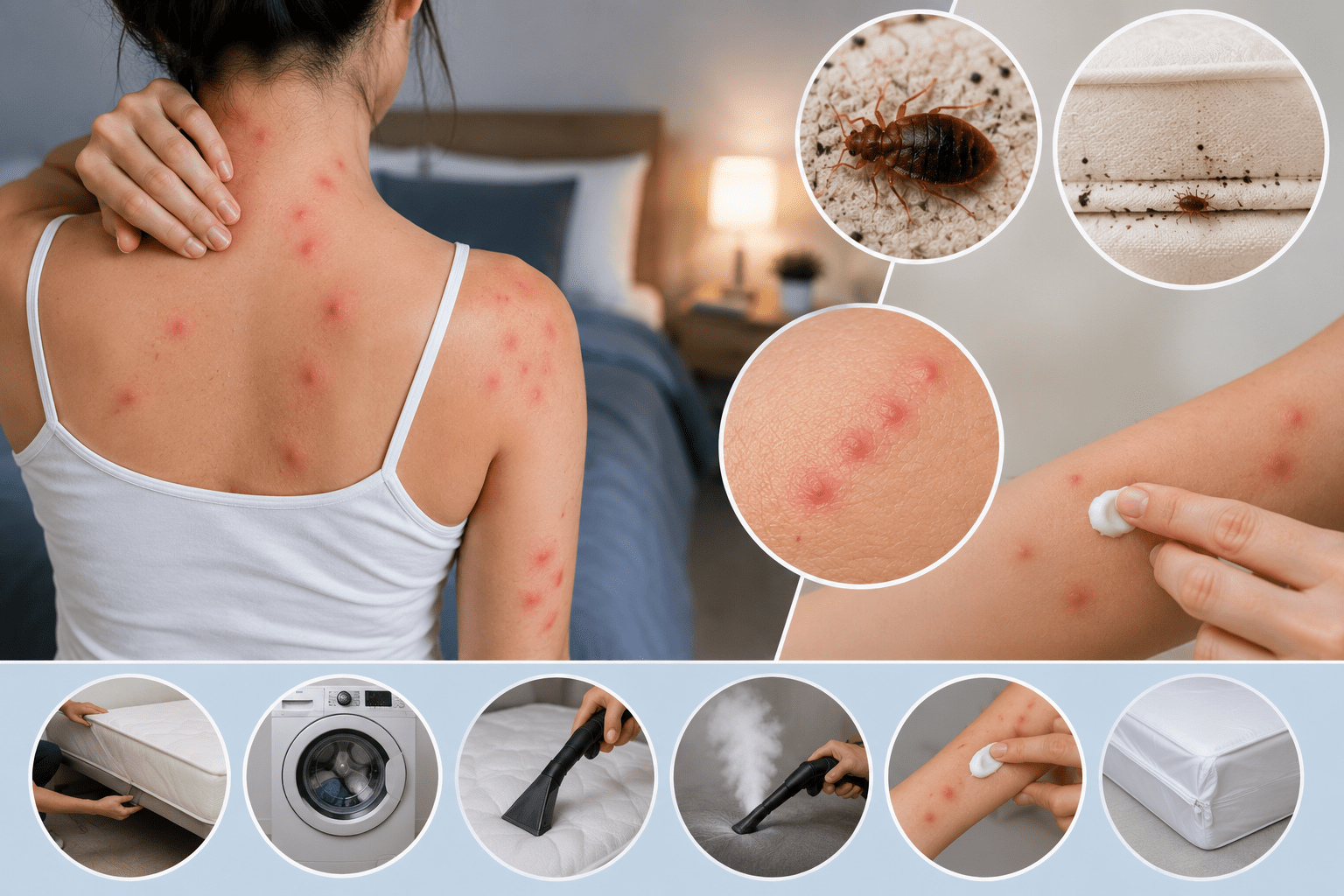
Bed Bug Bite Symptoms
Three red bumps on your forearm. You don’t remember getting bitten. You weren’t camping, you haven’t been near tall grass, and there’s no way a mosquito was in the bedroom last night.
So what bit you?
If bed bugs crossed your mind, that’s probably why you’re here. And honestly, the fact that you’re searching “bed bug bite symptoms” tells me you already suspect this isn’t just a random itch. This guide will help you figure out if you’re right — what the bites actually look like, how to tell them apart from other insects, what to put on them right now, and how to find out if there’s something living in your mattress that you really don’t want there.
Table of Contents
- We can help you get rid of Bed Bug, fast.
What Are Bed Bug Bites?
Bed bug bites are skin reactions generated by the bite of Cimex lectularius, which is the usual bed bug. Flat, reddish-brown, approximately the size of an apple seed when they haven’t been fed. They don’t fly. They don’t leap. They just crawl, little by little, at night, and they’re really good at not being discovered.
What Causes Bed Bug Bites?
Blood. That’s it. Bed bugs find you by following the carbon dioxide you exhale while you sleep and the heat coming off your body. Once they’re on you, they feed for somewhere between 3 and 10 min, then slip back into a seam or break well the next morning.
Most people never feel a thing. Bites occur in groups or lines because one bug will often probe the skin multiple times before finding a spot it likes, or because numerous bugs are feeding in the same zone at once.
What Do Bed Bugs Inject Into the Skin?
2 things: an anticoagulant to keep your blood fluid, and an anaesthetic so you don’t feel the occurrence. The itch and redness come hours later, when your immune system starts responding to the proteins in their saliva.
How bad your reaction is relies on your body, not the bug. Some people get an elevated welt within an hour. Some people take 2 or 3 days to react. And about 30% of people show nothing at all, which is a big part of why pests can hide for months.
Are Bed Bug Bites Dangerous?
For most people, no. The CDC and EPA both confirm that bed bugs don’t transmit disease through biting. The bite itself isn’t the real problem.
The problems that do show up are secondary — scratching breaks skin, broken skin gets infected, and infections occasionally need antibiotics. Allergic reactions happen too, and while serious ones are rare, they’re not unheard of. Then there’s the sleep disruption. The anxiety. Lying awake doing mental math about how long this might have been going on. That side of things doesn’t get talked about much, but it’s genuinely rough.
Common Bed Bug Bite Symptoms
Bed bug bite symptoms are hard to pin down partly because they look different on different people. Same bug, same night, two people in the same bed — one gets a cluster of welts, one gets nothing.
Signs worth looking for:
- Small red bumps or welts, often with a slightly darker centre
- Bites in a line, zigzag, or tight cluster — not scattered randomly
- Itching that gets worse by the next morning, not better
- Some mild swelling around each bite
- A burning or stinging feeling, especially if your skin is sensitive
- New bites appearing specifically on skin that was uncovered while you slept
Red, Itchy Bumps
The classic bed bug bite is a small red bump with a slightly darker spot in the middle. About the same size as a mosquito bite, but the itch sticks around much longer. Days two and three are usually the worst. Without treatment, it can drag on for a week or more.
The “Breakfast, Lunch, Dinner” Pattern
Pestpro specialists have a name for it: breakfast, lunch, dinner. Three or more bites in a rough line on the same patch of skin. The bug feeds, gets slightly disturbed, shuffles a centimetre along, feeds again. When you see that arrangement, it’s a much stronger indicator of bed bugs than a few scattered bumps would be.
Swelling and Inflammation
Not every bite swells, but some do. Mild puffiness around the site is just your immune system doing its thing and usually settles down within a few days once you start treating it.
Burning Sensation
Most people describe itching, but some get a dull burning feeling instead, especially on day one. More common in people with sensitive skin. It tends to ease up fairly quickly.
Delayed Reactions
This is the part that trips most people up. Some bites don’t show up on your skin for 24 to 72 hours. A small number of people don’t react visibly for up to two weeks. By the time you notice something, you have no idea when it actually happened — which is exactly why infestations stay hidden as long as they do.
Severe Allergic Reactions
Uncommon, but real. Widespread hives, difficulty breathing, significant swelling away from the bite site — if any of that follows a bite, that’s emergency care territory, not a home treatment situation.
What Do Bed Bug Bites Look Like?
How Bites Look on Different Skin Tones
On lighter skin, bites usually show up as raised pink or red welts. On medium to darker skin, the redness is often much harder to see — bites can look like a subtle dark mark or small area of swelling that’s easy to dismiss. Most photo guides only show bites on light skin, which means people with darker complexions frequently go through a round of misdiagnosis first.
Bed Bug Bite Stages
Early: Small red bump, sometimes with a pale ring around it. Itching begins.
Inflamed: The bump swells a bit, itch intensifies, redness deepens. Usually worst around day two or three.
Healing: Redness fades, bump flattens, skin returns to normal. Takes anywhere from a few days to two weeks depending on the person and whether they’ve been scratching.
What to Look for in Photos
Confirmed bed bug bite photos show clusters of three to five raised bumps, usually on the arm, leg, or neck. No fluid-filled blisters, no dark necrotic center. If you’re seeing blisters, that points somewhere else — a different insect or a skin reaction unrelated to bed bugs.
How Long They Last
Basic treatment, no complications: one to two weeks. Mild reactions, a few days. Heavily scratched bites or more reactive immune systems can stretch that out, and sometimes leave behind a patch of skin discoloration that takes a while to fade.
Bed Bug Bites vs Other Insect Bites
This is worth getting right. Treating the wrong thing while bed bugs keep feeding is a frustrating and avoidable situation.
Bed Bug Bites vs Mosquito Bites
Mosquito bites show up randomly — wherever the mosquito landed, however you were positioned. They itch immediately and usually fade within a couple of days. Bed bug bites cluster on skin that was uncovered during sleep, show up hours later, and stick around much longer.
Bed Bug Bites vs Flea Bites
Fleas go for the lower body. Ankles and lower legs, almost exclusively. The bites are small, intensely itchy, and often have a tiny red halo. Bed bug bites land higher up — arms, shoulders, neck — and they’re generally larger.
Bed Bug Bites vs Spider Bites
One spider, one bite. Almost always. They can swell significantly and occasionally have a darker center. The classic “two puncture marks” is mostly fiction — few spiders actually leave two distinct marks. Multiple bites grouped together are not spider bites.
Bed Bug Bites vs Hives
Hives don’t stay in one place. They shift around the body, change shape, and usually respond fast to antihistamines. Bed bug bite symptoms sit fixed in one spot, look consistent from bite to bite, and keep coming back in the same location you’ve been sleeping.
Quick Comparison Table
|
Feature |
Bed Bugs |
Mosquitoes |
Fleas |
Spiders |
|
Pattern |
Line or cluster |
Random |
Random, lower body |
Single bite |
|
Timing |
Overnight |
Anytime |
Anytime |
Anytime |
|
Location on body |
Arms, neck, shoulders |
Exposed skin |
Ankles, legs |
Anywhere |
|
Itch |
High, delayed |
Immediate |
Immediate, intense |
Low to moderate |
|
Clue |
Blood stains on sheets |
Outdoor activity |
Pets in home |
Outdoor areas |
Where Bed Bug Bites Commonly Appear on the Body
Arms, Legs and Neck
These get bitten most because they’re most often uncovered during sleep. Short-sleeve sleepers tend to find bites clustered on the forearms. Back sleepers often get them on the neck or calves.
Face and Shoulders
If your face or shoulders aren’t under the sheets, bed bugs will feed there too. Bites on the face get misread as acne or a skincare reaction constantly — and that misread can mean weeks of treating completely the wrong thing.
Why Only Exposed Skin Gets Bitten
Bed bugs can’t bite through fabric. Any area covered by clothing or bedding is protected. Bite patterns often follow the edge of what you wore to sleep — collar line, sleeve hem, waistband of shorts. That pattern alone can tell a pest specialist quite a bit about where the infestation is concentrated.
What Your Sleeping Position Reveals
Back sleepers: bites on the arms and neck. Side sleepers: bites on whichever shoulder was facing up. The location of bites can actually indicate which side of the bed has the heavier concentration of bugs.
How Long Does It Take for Bed Bug Bite Symptoms to Appear?
Immediate vs Delayed
Some people react within an hour. Others wait two or three days. There’s no way to predict which you’ll be — and your reaction can change over time as your immune system gets more familiar with the saliva proteins.
Why Some People Show Nothing
Roughly 30% of people have no visible reaction at all. This is especially common in older individuals. An infestation can run for months in a home where nobody shows bites — no complaints, nothing to see, just bugs multiplying undisturbed.
Reactions Get Stronger Over Time
Repeated exposure often means stronger reactions. Someone who showed nothing at the start of an infestation may find that bites become increasingly visible and uncomfortable the longer it goes on. The immune system recognizes the proteins and responds harder each time.
Signs You May Have a Bed Bug Infestation
Bites alone don’t confirm anything. These are the signs that actually connect what you’re seeing on your skin to something in your home.
Blood Spots on Sheets
Small rust-colored spots on your sheets or pillowcase, especially when they appear repeatedly, usually come from bugs being crushed after feeding. That, alongside bites, is a strong indicator that something more than a random insect is involved.
Staining on the Mattress
Dark staining along mattress seams — the color of dried blood — comes from crushed bugs or fecal matter. It concentrates along the seam stitching and at corners.
Tiny Black Marks
Bed bug excrement looks like a small ink dot that bleeds slightly into fabric. Check mattress seams, behind the headboard, and the creases of nearby furniture. Use a flashlight.
Shed Skins and Eggs
Bed bugs shed their exoskeleton five times as they mature. The translucent shells are small but visible. Eggs are pearl-white, about 1mm — roughly the size of a pinhead — laid in clusters in hidden spots.
A Musty Smell
Heavy infestations produce a sweet, musty odor from the bugs’ scent glands. Some people describe it as coriander-like, others say it smells like a damp towel left in a closed drawer too long. If a bedroom has an unexplained smell, it’s worth investigating.
Where They Hide
- Mattress seams and piping
- Inside box springs
- Bed frame joints and cracks
- Behind loose wallpaper and picture frames
- Inside electrical outlet boxes
- Furniture cracks close to the bed
The early signs of bed bugs are easy to overlook if you don’t know what you’re looking for. Find several of these together and do a thorough check before the population has more time to grow.
How to Treat Bed Bug Bites at Home
Clean the Area First
Wash the skin with mild soap and water. Removes surface irritants and reduces infection risk if you’ve been scratching.
Anti-Itch Creams and OTC Options
1% hydrocortisone cream applied directly helps with inflammation and takes the edge off the itch. Oral antihistamines — diphenhydramine is the most common — help most at night, when itching tends to be worst.
Cold Compress
A cold cloth or an ice pack wrapped in a towel held over the area for 10 to 15 minutes brings down swelling and gives some temporary relief. Don’t put ice directly on the skin.
On Scratching
Everyone knows not to, but here’s the actual reason it matters: breaking the skin lets bacteria in. A minor bite that gets scratched open can become a genuine skin infection requiring antibiotics. If the urge to scratch is persistent, keep the area covered during the day and use antihistamines at night to get through it.
Natural Remedies
Aloe vera has some anti-inflammatory evidence behind it. Diluted tea tree oil has mild antiseptic properties. Both can help at the surface level. Neither does anything about the bed bugs, and neither replaces real treatment if you’re reacting strongly.
For medical advice, speak to a qualified healthcare professional.
When to See a Doctor
Signs of Infection
A bite that keeps getting more red, warm, and swollen several days in — especially one producing any discharge — is probably infected. That needs a doctor, not more hydrocortisone.
Severe Allergic Reactions
Trouble breathing, chest tightness, widespread hives, throat swelling — don’t wait. That’s emergency care.
Bites That Won’t Heal
Two weeks of basic treatment and no improvement. See a doctor. Some people need prescription topical steroids or stronger antihistamines than what’s available over the counter.
Sleep, Anxiety, Mental Health
This rarely gets brought up but it should. People living with an undiagnosed infestation develop real anxiety around sleep. Checking the mattress every night before bed, lying awake tense and itchy, dreading going to sleep. It’s exhausting in a way that’s hard to explain until you’ve been through it. Getting support for that side of things is as valid as treating the bites.
How to Get Rid of Bed Bugs Permanently
DIY Methods
People try hardware store sprays, diatomaceous earth, handheld steamers, throwing out the mattress. Some of this temporarily reduces numbers. None of it reliably clears an infestation.
Why DIY Mostly Fails
Two reasons. First, bed bugs have developed resistance to most consumer insecticides. Second, and more importantly, they hide in places sprays never reach — wall voids, behind electrical plates, deep inside furniture joints. Spray everything visible and the bugs in hiding just wait you out and re-emerge within a week or two.
Professional Inspection
A proper inspection maps every possible harborage point — mattresses, box springs, bed frames, nightstands, skirting boards, and in connected properties, the rooms next door. The how to check for bed bugs process is far more thorough than most people expect when they see it done for the first time.
Heat vs Chemical Treatment
Heat treatment raises the room to between 50°C and 60°C for several hours. At that temperature, bugs and eggs die wherever they’re hiding. Chemical treatment uses targeted insecticides applied to specific harborage zones rather than broadcast across the whole room. Heat works better for whole-room treatment; chemicals are better for precision targeting in particular spots. A professional usually combines both.
How Long Does It Take
A single bedroom: 2 to 4 hours. A full home: most of a day. Follow-up inspections are normally scheduled two to four weeks out to confirm the infestation is actually gone.
Why Choose PestPro for Bed Bug Treatment
Specialists, Not Generalists
Pestpro technicians are trained specifically in bed bug biology, not just general pest management. That matters more than it sounds. Bed bugs move, hide, and reproduce differently from most common household pests. The treatment has to account for that.
Safe for Families
All treatments are approved for residential environments and applied in a targeted way. You won’t need to sleep elsewhere for a week or throw out your mattress.
Infestation Mapping Before Treatment
Pestpro maps where the bugs are concentrated and how far the spread has gone before any treatment starts. That’s the difference between actually solving the problem and taking a rough guess at it.
Fast Response
Bed bugs reproduce fast. A small group left alone for a few weeks becomes a significantly bigger problem. Pestpro offers quick assessment appointments and prioritizes homes with young children or elderly residents.
Follow-Up Included
The inspection after treatment matters as much as the treatment itself. schedules a return visit to confirm elimination. If there’s any evidence of surviving bugs, they treat again.
If you’re waking up with new bites regularly, the bed bug control service is worth arranging before things spread further.
Prevention Tips After Treatment
Mattress Encasement
A bed bug-proof encasement zips all the way around and removes the main hiding spot from the equation entirely. Any bugs that survived inside the mattress get trapped and die within months.
Travel and Hotels
Hotels are one of the most reliable ways bed bugs get into homes. It has nothing to do with the quality of the hotel — well-reviewed properties at good price points get infestations too. When you check in: pull back the sheets and check the mattress seams and headboard before unpacking. Keep your bag on the luggage rack. When you’re home, put your travel clothes through a hot wash and dry immediately.
Laundry
Washing bedding at 60°C and tumble drying on high heat kills bed bugs at every life stage. After an infestation, do this weekly for a while. Always after travel.
Secondhand Furniture
This is the other most common re-entry point after treatment. Bed frames, sofas, upholstered chairs — inspect everything carefully before it comes inside. Every seam, joint, and underside of cushions.
Apartment Buildings
Bed bugs move between units through wall cavities, pipe runs, and electrical conduits. A neighbor’s infestation can become yours within weeks. Sealing gaps around baseboards and outlet boxes is a simple barrier most people only think to do after they’ve already had the problem.
Myths Worth Clearing Up
“Bed Bugs Only Infest Dirty Homes”
Wrong. Bed bugs don’t care about cleanliness. They care about access to a sleeping human. Five-star hotels get them. Hospitals get them. A spotless apartment can become infested from a single secondhand purchase or a bag brought home from travel.
“You’d Feel It Happening”
No. The anesthetic in their saliva takes care of that. You feel nothing when they bite. The itch you notice hours later is your immune system reacting, not the bite occurring. People who say they felt it happening were almost certainly feeling the itch of an earlier bite.
“Bed Bugs Spread Disease”
The CDC has found no evidence of bed bugs transmitting disease to humans. The real risks are secondary infections from scratching and, in some people, allergic reactions.
“A Good Spray from the Hardware Store Will Sort It”
It’ll kill whatever it directly contacts. The bugs in the wall, inside the box spring, behind the headboard — those don’t get touched. And many established bed bug populations have developed resistance to pyrethroids, the most common ingredient in consumer sprays, meaning even direct contact doesn’t always kill.
Bites in Children, Older Adults, and Sensitive Individuals
Children
Kids react harder than adults. Bigger welts, more intense itching, and a much higher chance of scratching bites open. Bites on a child’s face or scalp are particularly distressing — for the child and for the parents.
Older Adults
Older skin tends to show less visible reactions because immune responses become less aggressive with age. That can mask a problem for longer. But elderly skin is also more fragile and more prone to breaking down from repeated scratching, which raises infection risk even from minor bites.
People with Allergies
Existing allergies or a hypersensitive immune system means stronger reactions to bed bug saliva proteins. Widespread hives, significant localized swelling, and symptoms that last longer are all more common in this group.
Pets
Bed bugs strongly prefer human blood. But if humans aren’t accessible, they’ll feed on pets. Dog or cat scratching without an obvious cause, combined with unexplained bites on the people in the house — that combination is worth taking seriously.
Conclusion
Bed bug bite symptoms are easy to miss, easy to confuse with something else, and easy to explain away the first few times. The bites themselves are manageable. The infestation causing them is not something that gets better on its own.
Caught early, this is a relatively contained problem. Left alone for six months, it’s a much bigger one. The treatment is faster, cheaper, and simpler the earlier it happens — that’s not a sales pitch, it’s just how infestation growth works.
For a closer look at dealing with an active infestation, the how to get rid of bed bugs guide walks through everything from initial inspection to professional treatment.
The bites stop when the bed bugs stop. Start there.
Frequently Asked Questions
Small red bumps on the arms, neck, or shoulders, itchy and arranged in a rough line or cluster. Rust-colored spots on the pillowcase or sheets are often the first environmental sign.
Not necessarily. A single bug feeds roughly every 5 to 10 days. Multiple bugs present means more regular overnight biting.
Bed bug bites cluster on skin that was uncovered during sleep and show up hours later. Mosquito bites are random, appear after outdoor exposure, and itch immediately. Bed bug symptoms last longer.
The bites stay where the bug fed. Scratching can spread bacteria to surrounding skin and cause a secondary infection, but the bites themselves are fixed in place.
Your immune system releases histamine in response to proteins in the bed bug's saliva. Antihistamines work on bites because they're addressing the actual cause of the itch.
One to two weeks with basic treatment. Mild reactions can clear in a few days. Heavily scratched bites or more reactive immune systems can stretch that out and sometimes leave skin discoloration.
Direct heat above 50°C. Professional heat treatment, steam, and hot tumble drying all work on contact. Consumer insecticides kill on direct contact but won't reach bugs that are in hiding.
Yes. Easily. Many infestations are only confirmed when a specialist does a systematic physical inspection. The bugs are small, flat, and built for concealment.
The bites aren't dangerous for most people. The infestation producing them is the concern. Consistent unexplained bite patterns are worth a professional inspection.
Not directly, but children react more severely and are more likely to scratch bites open. Watch for increasing redness, warmth, and swelling, and see a doctor if bites aren't improving.
They can use clothing as a temporary hiding spot, especially clothes left on the floor near the bed. Their preference is stable harborage like mattress seams, but they'll use what's available.
Usually not. Clean-healing bites leave no mark. Heavy scratching that breaks the skin can cause hyperpigmentation or faint scarring, more noticeable on darker skin tones.
Lavender and tea tree oil come up often. The evidence for them as actual deterrents is very thin. Encasements, heat treatment, and professional intervention are what actually work.
Yes. A single bug may feed several times in one night if disturbed between feeds — moving a short distance and starting again. That's a big part of why the clustered line pattern is so consistent.