
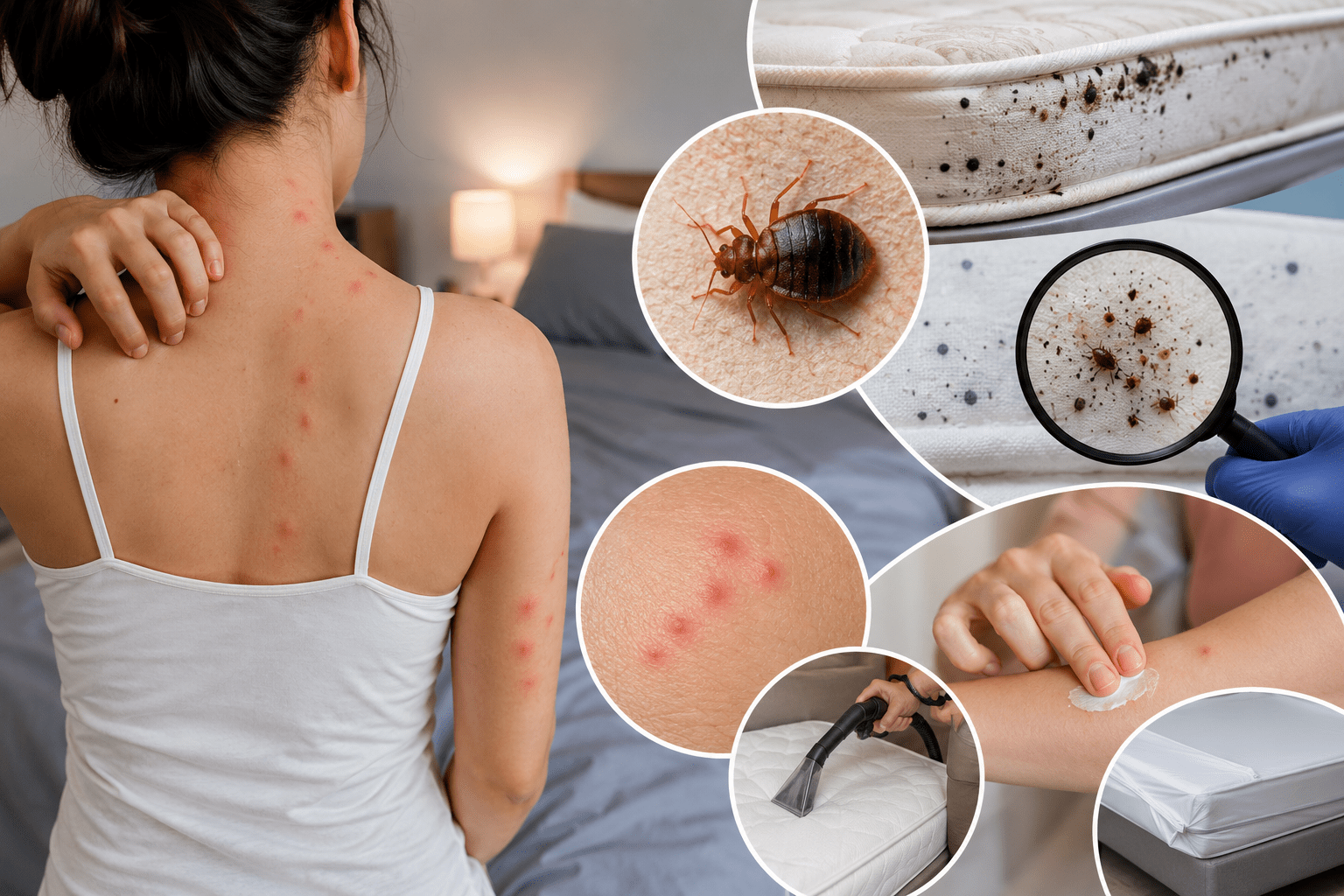
Bed Bug Bite Marks
Most people who call Pest-Pro about bed bugs say the same thing first. “I thought it was mosquitoes.” Then a week later, still getting bitten every night, they start looking more carefully at the mattress.
Bed bug bite marks are genuinely easy to miss at first. Not because they look unusual but because they look normal. Small red bumps. A bit itchy. Could be anything, right? The problem is they keep coming back. Same spots on your body. Same time of night. And eventually the pattern becomes impossible to ignore.
If something has been biting you at night and you can’t figure out what, this is worth reading properly.
Table of Contents
- We can help you get rid of Bed Bug, fast.
What Are Bed Bug Bite Marks?
A bed bug crawls onto your skin while you sleep, injects a tiny amount of numbing saliva, and feeds on your blood. You feel nothing. The anaesthetic in the saliva is what makes the whole thing so easy to miss while it’s happening.
What shows up on your skin later is your body reacting to those saliva proteins. That reaction is what we call bed bug bite marks. They’re not a wound exactly. They’re more like an allergic response. Red, raised, itchy.
Bed bugs don’t transmit diseases. That’s worth knowing upfront. But the skin reaction ranges from “slightly annoying” to genuinely miserable depending on the person. And the longer an infestation goes untreated, the more bites you accumulate and the worse the reaction tends to get over time.
Pest-Pro gets bed bug calls from across Singapore. Older HDB blocks, newer condos, boutique hotels, student hostels. There’s no property type that’s immune to this.
What Do Bed Bug Bite Marks Look Like?
Small. Red. Slightly raised. With a darker spot at the centre.
On their own, a single bed bug bite looks almost identical to a mosquito bite. What actually gives them away is the arrangement. Bed bugs bite, move a centimetre or two along your skin, then bite again. So what you find in the morning is a cluster of bites, or sometimes a rough line of them, all close together on the same area of your body.
People call this the “breakfast, lunch, dinner” pattern because three bites in a row is very common. It’s honestly the most reliable way to identify bed bug bite marks without doing anything else. Grouped bites in a line or cluster on your arm, shoulder, or neck. That’s the signature.
Mosquito bites don’t do this. They scatter randomly. If yours are grouped, that matters.
One more thing: not everyone shows visible marks. Some people wake up with obvious welts within a few hours of being bitten. Others take two or three days to react. And some people show almost nothing at all even after multiple bites. So if your partner has no marks but you do, that doesn’t mean they weren’t bitten. Their immune system just doesn’t respond the same way yours does.
Symptoms of Bed Bug Bites You Should Know
The itch is what most people find hardest to deal with. It’s not like a mosquito bite where it fades within an hour or two. Bed bug bites symptoms tend to linger. The itching comes back, especially at night, and scratching genuinely makes things worse over time even though it helps for a moment.
Some people experience a burning sensation rather than a classic itch. Swelling and redness around each bite is common. In people with more reactive skin, fluid-filled blisters can form at the bite site.
The delayed reaction is what confuses things most. You might get bitten on a Tuesday night and not notice anything by Wednesday morning. The marks show up Thursday. You spend two days blaming your laundry detergent or the new brand of body wash you bought. This timeline thing is a big reason why bed bug bite marks get misidentified so often.
And scratching. If you break the skin scratching the bites, bacteria can get in. Secondary infections from scratched bed bug bites are more common than people expect. They slow healing significantly and sometimes need antibiotic treatment. Worth being aware of.
Where Do the Bites Usually Appear?
Exposed skin. That’s the simple answer. Whatever you leave uncovered while you sleep is what bed bugs will go for.
Arms and shoulders. The neck and back of the neck. Face, particularly in children who tend to move around more in their sleep. Legs and ankles if your feet are outside the blanket. Bed bugs aren’t going to work their way through layers of fabric when there’s bare skin available.
If you’re finding bites under clothing or in areas that should be covered, it’s probably not bed bugs. Could be mites, fleas, or something else entirely. That’s worth thinking about before you start stripping the bed.
Bed Bug Bite Marks vs Other Insect Bites
This is where people get stuck. And it makes sense because visually, these bites really do look similar to other insect bites at first glance.
Feature | Bed Bug | Mosquito | Flea |
Pattern | Cluster or rough line | Random, spread out | Concentrated at ankles/lower legs |
When they bite | Mostly at night | Any time | Day or night |
Itch severity | Persistent and intense | Moderate, fades | Very intense |
Where on body | Arms, shoulders, neck, upper body | Anywhere | Below the knee mainly |
Visible centre dot | Usually | No | Sometimes |
The pattern is the thing to look at first. Mosquitoes don’t follow a path. They land, bite wherever they are, and fly off. Bed bugs move along your skin, which is why the bites end up grouped.
Flea bites mainly show up on the lower legs and ankles, which is different from where bed bug bite marks typically appear. If your bites are on your calves, fleas are worth investigating. If they’re on your upper arm or neck in a little group, bed bugs are the more likely explanation.
Not sure which you’re dealing with? Actually checking the mattress clears it up faster than guessing. The guide on how to check for bed bugs covers exactly what to look for and where.
How Long Do Bed Bug Bite Marks Last?
A week for most people. Sometimes a bit less.
Days one and two are usually when the itch and swelling are at their worst. By day three or four things start improving. Day six or seven, most mild bed bug bite marks are gone or almost gone.
Scratch them open and that timeline stretches out. Broken skin heals slower and bacteria makes things messier. Some heavily scratched bites leave faint marks that take two to three weeks to fully clear.
People with stronger allergic reactions might be looking at ten days to two weeks regardless of scratching. If infection develops, that’s its own separate issue that often needs prescription treatment rather than just cream and patience.
Why Two People in the Same Bed Can Have Completely Different Reactions
One person wakes up covered in marks. The other has nothing. This genuinely confuses people because it seems like it shouldn’t be possible.
It comes down to immune response. Your body reacts to proteins in bed bug saliva, and how strongly it reacts depends on your immune system and your history of exposure. First-time exposure often produces little or no visible reaction. The body hasn’t been sensitised yet. Repeated exposure over time usually produces a stronger, faster response.
This also means you can’t use the number or severity of bites as a measure of how bad the infestation is. Someone with almost no visible marks might be sleeping on top of a serious infestation. The bites are useful evidence that something is there. They’re not a reliable indicator of how much.
Are Bed Bug Bites Actually Dangerous?
No disease transmission. Bed bugs, unlike Singapore mosquitoes, don’t carry and pass on illnesses through their bites. That’s the most important medical fact here.
But calling them harmless would be an overstatement. Scratched bites can develop bacterial infections. People with genuine allergies to bug saliva proteins can have serious reactions that go beyond normal skin irritation. And the impact on daily life from disturbed sleep, constant itching, and the anxiety of knowing something feeds on you every night is real. Some families find it genuinely distressing, especially with young children involved.
Bed bug bite marks aren’t going to send you to hospital under normal circumstances. But they’re a symptom of something that needs dealing with, not just living around.
If the bites are appearing regularly, the early signs of bed bugs is a good next step to read before doing anything else.
What to Do the Morning You Find Bite Marks
Wash the area. Soap and water. Press something cold against the skin for a few minutes to bring the swelling down and take the edge off the itch. Then go look at the mattress instead of spending two hours googling skin conditions.
Check the seams along the edges of the mattress, especially the corners and the side closest to the wall. Run your finger along them. You’re looking for small dark brown spots (fecal staining from the bugs), pale shed skins (papery and almost translucent), or the bugs themselves. They’re flat, oval, reddish-brown, and about the size of an apple seed.
Find any of that and you’ve confirmed what you’re dealing with. Strip the bed, wash everything at 60°C minimum. And at that point, a hardware store spray is not the right next step.
Treatment for Bed Bug Bite Marks
The skin treatment part is fairly simple. Nothing fancy required.
Home Remedies
Cold compress first, every time. It’s the most immediately effective option with no risk of irritation. Aloe vera gel is good for ongoing relief through the day and is gentle enough to use on children. Calamine lotion is readily available at any pharmacy in Singapore and works well. A paste of baking soda mixed with a small amount of water, applied directly to the bite, takes the edge off when the itch is at its worst.
Medical Treatments
Oral antihistamines like cetirizine or loratadine are available without a prescription and make a real difference for persistent itching. Hydrocortisone cream at 1% applied directly to the bites reduces redness and inflammation. For stronger reactions, a GP can prescribe corticosteroids. If a bite gets scratched open and shows signs of infection, don’t wait. See a doctor and get antibiotics sorted rather than hoping it clears on its own.
When the Bites Need a Doctor
Most don’t. But see a doctor if the bite area keeps getting bigger and redder two days after it appeared instead of improving. If there’s pus, increasing warmth, or hardening of the surrounding skin. If a fever develops around the same time as the bites. If hives or a rash spreads beyond the immediate bite area.
And if there’s any breathing difficulty after being bitten, that’s A&E, not a GP appointment.
Signs That the Problem Is Bigger Than the Bites Themselves
Bed bug bite marks on your skin are usually how people first realise something’s there. But the room itself leaves clues too.
Small rusty stains on sheets or the mattress surface. Dark brown pinhead-sized specks along the mattress seams. Pale papery shed skins near the bed base or skirting boards. A faint sweet musty smell coming from the bed area that wasn’t there before. And in more advanced infestations, visible bugs in the seams, behind the headboard, or tucked into the wooden joints of the bed frame.
Finding these alongside bite marks confirms an active infestation. At that stage, the how to get rid of bed bugs guide explains what thorough treatment involves and why it matters to do it properly rather than partially.
How to Reduce the Chances of Being Bitten
Check the mattress seams every couple of months. Five minutes. Catches problems before they grow. A zipped mattress encasement traps anything already inside and stops new bugs from settling in through the fabric.
Wash bedding at 60°C weekly. That temperature kills bed bugs and eggs at every stage.
Second-hand furniture is by far the most common way bed bugs enter Singapore homes. Sofas and bed frames especially. Inspect anything carefully before it comes inside. When you travel, check the hotel mattress and headboard seams before you put your luggage down. Keep bags off the floor. Check them again before bringing them back inside your home. It sounds like overkill until you’ve done the post-holiday inspection and found something.
Why DIY Sprays Almost Never Finish the Job
A lot of people try the off-the-shelf can first. Makes sense. It’s cheap and feels immediate.
The problem isn’t the intent. It’s that bed bugs live in places spray cans simply cannot reach. Inside wall joints. Behind power points. In the hollow legs of bed frames. Deep inside sofa cushions. And critically, the eggs are resistant to most over-the-counter insecticides. Kill the adults and the eggs hatch two weeks later. You’re back to the same situation, except now the bugs have scattered to harder-to-find spots throughout the property.
Partial treatment makes the second round more expensive and more complicated. Every pest professional at Pest-Pro has dealt with cases where a DIY attempt made things harder to resolve.
Professional Bed Bug Control in Singapore
For an active infestation, professional treatment is not an optional upgrade. It’s the approach that actually works.
Pest-Pro starts with a full inspection. The mattress, yes, but also furniture joints, skirting boards, power points, wall cavities, behind frames and fixtures. The point is to map where the infestation actually is, not just where it’s most visible. That matters because treatment applied in the wrong places doesn’t fix anything.
Pest-Pro uses targeted chemical treatment, heat treatment, or a combination depending on what the inspection shows and what’s appropriate for the home. Heat treatment raises the room to 50 to 60°C, which kills bugs and eggs at every life stage without leaving any chemical residue. Chemical treatment uses residual insecticides applied precisely to where bugs live and breed.
Treatment cost in Singapore starts at roughly $150 to $300 for a single room. Full-unit treatments and multi-session cases cost more. Two sessions around two weeks apart are often needed to catch any eggs that hatch after the first round.
Details on the full process are on the Pest-Pro general pest control page. The Pest-Pro bed bug treatment page covers the bed bug-specific approach if you want to go straight to that.
Households With Children or Pets
If there are kids or animals in the home, the question of chemicals is completely reasonable to raise.
Pest-Pro offers heat treatment as the chemical-free option. Nothing is sprayed. No residue on surfaces. No ventilation period needed after the treatment is done. The heat alone does the work. For households where heat treatment isn’t practical, Pest-Pro uses low-toxicity insecticides and can discuss silica gel-based alternatives that work physically rather than chemically.
Ask Pest-Pro about this specifically when you call. You’ll get a direct answer on what’s being used and whether it’s appropriate for your situation.
Frequently Asked Questions
Small red bumps, raised, usually with a darker centre. Appearing on exposed skin. The cluster or line pattern is the clearest identifier. Random bites scattered everywhere are more likely something else.
Pattern first. Then check the mattress seams. Dark spots or shed skins confirm an infestation. Scattered bites with no mattress evidence points elsewhere.
Not always. Reactions range from a few hours to three days later. First-time exposure sometimes produces almost no reaction at all.
Three to seven days for mild reactions. Scratched or infected bites can stretch to two weeks or longer.
No disease transmission. Main concerns are skin infection from scratching and, in some people, stronger allergic reactions. Neither common but both possible.
The bites don't spread. Bacteria from scratching can cause infection that spreads. Keep the area clean and stop scratching.
Cold compress. Then oral antihistamine or hydrocortisone cream. Scratching makes it considerably worse after the initial few seconds of relief.
Immune response varies a lot between people. No visible marks doesn't mean no bites occurred.
You need to deal with the infestation. A mattress encasement helps but won't eliminate an active population. Get a Pest-Pro inspection done.
When you find confirmed signs beyond bites alone. Live bugs, dark fecal spots, shed skins, or a bite pattern that keeps coming back. Call Pest-Pro earlier rather than later. Early infestations are simpler and less expensive to treat than established ones.
Bed bug bite marks are the symptom. The infestation is the problem. Treating the skin handles the discomfort. Getting rid of the source is what stops it happening again.
If you're based in Singapore and need a proper inspection, Pest-Pro handles this regularly. The team knows where to look and what to do when they find it.