
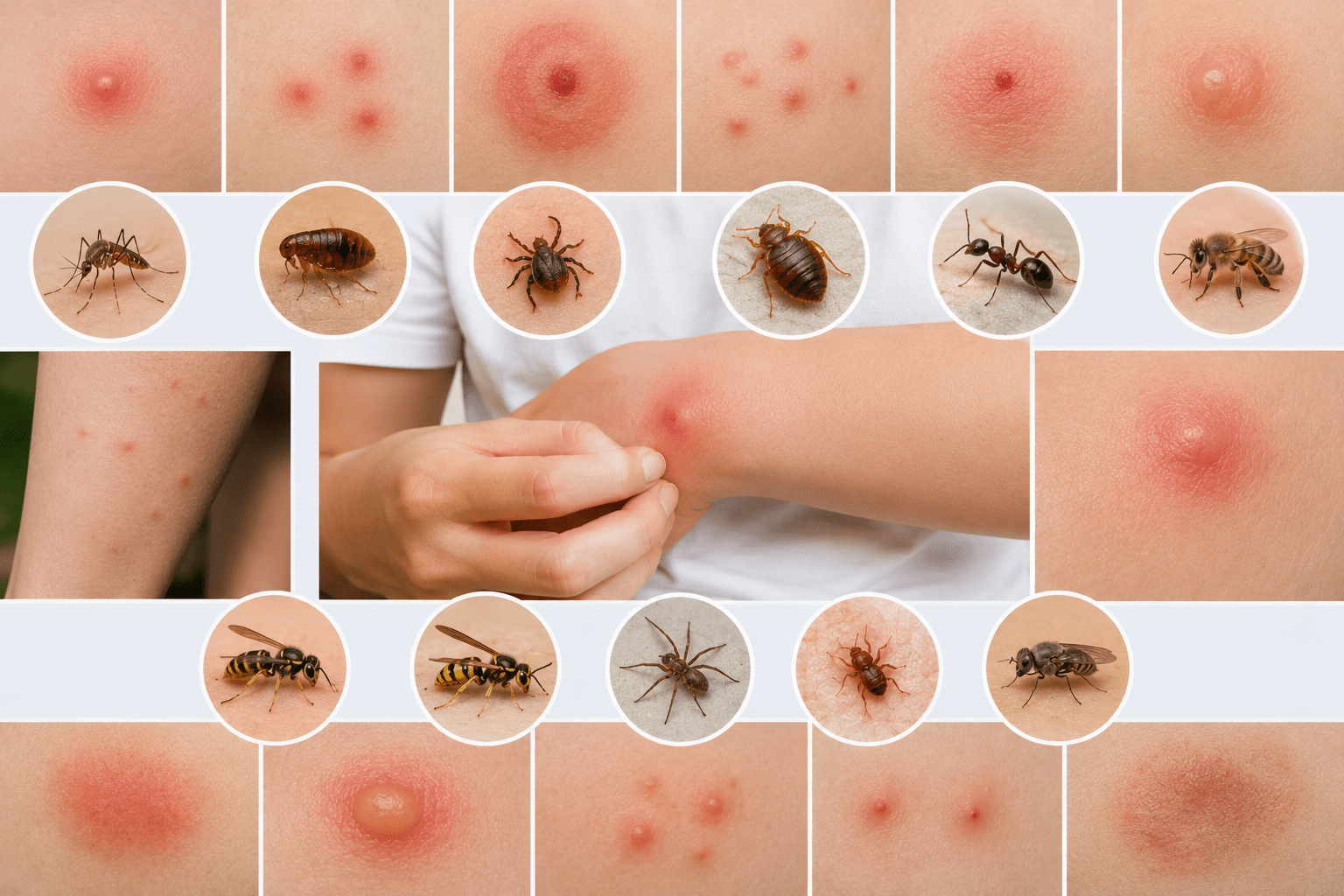
11 Types of Insect Bites
Six red bumps on your arm. No idea what left them.
You search online and come out more confused. Every result looks the same, says something slightly different, and none of them actually tell you whether you need a cream or a pest control company.
That’s the real problem with insect bites they look similar but mean totally different things. A mosquito bite and a bed bug bite both swell and itch. But one of them means you were outside at the wrong time. The other one means something’s living in your mattress.
This guide covers 11 common types. What they look like, how to spot them, and what to do.
Table of Contents
- We can help you get rid of Insect Bites, fast.
Quick Comparison Chart of Common Insect Bites
Bite Appearance
Insect | Bite Shape | Colour | Typical Location |
Mosquito | Round raised welt | Pink/red | Arms, legs, neck |
Bed bug | Flat cluster or line | Red | Back, arms, shoulders |
Flea | Hard tiny bump | Red, pale ring | Ankles, lower legs |
Tick | Flat wound or ring | Red | Scalp, groin, armpits |
Spider | Two fang marks | Red/purple | Anywhere |
Fire ant | White pustule | White-tipped | Feet, ankles |
Chigger | Small red welt | Bright red | Waist, ankles, knees |
Pain vs Itch
Bee stings burn immediately — you know the second it happens. Flea and chigger bites are the opposite: not bad upfront, but you’ll be scratching them for days. Bed bug bites are the weird ones. They don’t show up for hours. You sleep right through it and wake up with no idea what happened.
Which Ones Are Worth Taking Seriously
A lot of bites clear up on their own within a week without you doing anything. The ones that need closer attention: tick bites for Lyme disease risk, black widow and brown recluse spider bites, fire ant stings if you’ve had allergic reactions before, and bee or wasp stings if you carry a venom allergy.
When to Stop Waiting and See a Doctor
Redness that keeps spreading outward. Pus. Fever. A bullseye-shaped rash around a bite. Swelling around the face or throat. Trouble breathing after a sting. These don’t improve by themselves.
11 Types of Insect Bites You Should Know
Mosquito Bites
What Mosquito Bites Look Like
Soft pink welts, round, roughly 1 to 2 cm across. They puff up within minutes and slowly flatten over the day. Kids sometimes get a bigger, puffier reaction called Skeeter syndrome. It looks alarming but it’s not dangerous — just very itchy.
Common Symptoms
The itch starts fast. There’s a little warmth around the site. Scratching makes it last longer and you risk opening the skin up, which brings infection into the picture.
Diseases Spread by Mosquitoes
In Singapore, dengue is the main concern — fever, joint pain, rash. Zika and malaria show up in different regions. If bites keep happening while you’re indoors, there’s a breeding source somewhere close by. Treating the bites does nothing about that.
Best Treatments for Mosquito Bites
Cold compress, then hydrocortisone cream or antihistamine cream on the site. Cetirizine or loratadine work well when you’ve got several at once. Don’t scratch — obvious advice but genuinely makes a difference.
How PestPro Helps Prevent Mosquito Infestations
Treating the bite deals with today. It doesn’t touch the breeding population nearby. PestPro’s mosquito control service tracks active breeding sites, applies residual treatment, and monitors over time. That’s how the bite count actually drops.
Bed Bug Bites
Signs of Bed Bug Bites
Flat, slightly raised red bites on skin that was exposed during sleep — neck, arms, shoulders, back. They show up in clusters. Roughly 30% of people never get a visible reaction, which is how an infestation can quietly grow for months before anyone notices.
Why Bed Bug Bites Appear in Clusters
Bed bugs feed several times per session and move along a blood vessel as they go. That’s where the three-in-a-row pattern comes from — the one people sometimes call “breakfast, lunch, dinner.” Seeing that on your arm after sleeping is a reliable early sign.
How to Tell Bed Bug Bites From Mosquito Bites
Mosquito bites show up within minutes and itch straight away. Bed bug bites take several hours to appear. Mosquito bites scatter randomly. Bed bug bites group together. Bites appearing every morning without any time spent outdoors — that combination points squarely at bed bugs.
Hidden Signs of a Bed Bug Infestation
Pull back the mattress and check the seams. Look at bed frame joints and behind the headboard. Rust-coloured stains from dried blood, tiny dark specks, papery shed skins. PestPro’s early signs of bed bugs guide is worth checking through before you do anything else.
Professional Bed Bug Removal by PestPro
They’re not just in the mattress. They hide in wall cracks, behind power outlets, inside furniture joints. A consumer spray pushes them further into walls rather than killing them. PestPro’s bed bug control uses heat treatment alongside targeted insecticides to reach all life stages — eggs included — which is the only way to actually clear them out.
Flea Bites
What Flea Bites Look Like
Small, hard bumps with a red centre and a pale ring around the outside. They itch far more than their size suggests. Swelling is minimal, but the irritation sticks around for a few days at least.
Why Flea Bites Often Target Ankles
Fleas jump about 20 to 30 cm. Your ankles and lower legs are the closest target when you walk across infested carpet or sit on infested furniture. That’s it.
Flea Bites on Pets vs Humans
Pets tend to scratch around the neck, back, and base of the tail. People get bitten on the lower legs. Look for flea dirt in your pet’s fur — fine black specks that turn reddish-brown when damp.
Effective Flea Treatment and Prevention
Treat the pet with a vet-approved product before anything else. Then vacuum all carpets, rugs, and furniture — bag and bin the contents straight away. Hot wash all bedding. One treatment rarely does it because flea eggs survive in carpet fibres for weeks.
Tick Bites
Early Signs of Tick Bites
Ticks feed slowly and silently, sometimes attached for days before you find them. After time in grassy or wooded areas, check the scalp, behind the ears, armpits, groin, and back of the knees. Running your fingers through your scalp after a nature walk takes 30 seconds.
Lyme Disease Warning Symptoms
A ring of redness expanding outward from the bite site — the bullseye rash — is the main early sign of Lyme disease. It shows up between 3 and 30 days after the bite. Fatigue, fever, muscle aches, and stiff joints often follow.
How to Remove a Tick Safely
Fine-tipped tweezers, gripped as close to the skin as you can. Pull straight up with steady pressure. No twisting. Don’t use petroleum jelly, nail polish, or heat — all of these cause the tick to release more fluid into the wound. Wipe the area with rubbing alcohol after.
When Tick Bites Become Dangerous
If the tick was attached for more than 24 to 36 hours, or if any rash, fever, or joint pain develops in the weeks that follow — see a doctor. Lyme disease responds well to antibiotics early on.
Spider Bites
Common Spider Bite Symptoms
Redness, some local swelling, mild pain over a couple of days. Spider bites are probably the most over-blamed type of insect bites around — ordinary skin reactions get attributed to spiders all the time when something else entirely caused them.
Dangerous vs Non-Dangerous Spider Bites
Most spiders can’t break human skin, or their venom has no real effect on people. The two that are worth taking seriously: black widow and brown recluse.
Black Widow and Brown Recluse Bite Warning Signs
Black widow: spreading intense pain within an hour, muscle cramps, sweating, nausea. Brown recluse: starts mild, then a worsening wound with tissue breakdown develops over several days. Both need a doctor.
When to Visit a Doctor
A bite that keeps spreading, blistering, or developing a dark centre. Same goes if fever, vomiting, or muscle rigidity follows a suspected spider bite.
Fire Ant Bites
Why Fire Ant Bites Burn
Fire ants inject solenopsin, an alkaloid venom. Immediate, intense burning. And they latch with their mandibles and sting more than once, so a single encounter usually means a cluster of wounds.
Pustules and Allergic Reactions
White-tipped pustules develop within 24 hours at each sting site. Don’t pop them — it raises the infection risk. In some people, fire ant stings cause anaphylaxis. That’s a medical emergency.
First Aid for Fire Ant Stings
Leave the mound first. Wash the area with soap and water, apply a cold compress, take oral antihistamines for mild reactions. If you notice throat tightening or trouble breathing — epinephrine if it’s available, and emergency services.
Preventing Ant Colonies Around Your Home
Mounds appearing near the house foundation or garden beds are better dealt with early. Their ant removal guide is a practical starting point.
Bee Stings
Normal vs Allergic Reactions
Local pain, redness, and swelling that settles within a day — that’s normal. Hives spreading beyond the sting site, throat swelling, breathing problems, dizziness — allergic, needs emergency care.
Removing a Bee Stinger Correctly
Scrape it out sideways using a fingernail or card edge. Pinching pushes more venom in. The venom sac keeps pumping after the bee is dead, so getting it out quickly actually matters.
Signs of Anaphylaxis
Throat tightening, rapid heartbeat, blood pressure dropping, loss of consciousness. Emergency services first. Epinephrine if it’s on hand.
How to Reduce Swelling Fast
Ice in a cloth, 20 minutes on and 20 off. Ibuprofen for both pain and swelling. Normal reactions usually clear up within a day.
Wasp Bites and Stings
How Wasp Stings Differ From Bee Stings
Bees sting once and die. Wasps keep their stinger and can sting several times fast. Both can cause anaphylaxis — something to keep in mind if you’ve never been stung before and don’t know your reaction.
Multiple Sting Risks
Disturb a nest and dozens of stings can happen in seconds. That much venom causes toxic reactions even without a venom allergy — nausea, fever, and in bad cases, organ stress.
Outdoor Prevention Tips
Keep food and drinks covered when you’re outside. Closed shoes in the garden. If wasps keep returning to the same spot on your property, there’s probably a nest nearby.
Nest Removal Safety
Don’t try to remove it yourself. PestPro handles it through their bee and wasp control service with the right protective equipment. Unprotected attempts go badly the vast majority of the time.
Hornet Stings
Why Hornet Stings Are More Painful
More venom per sting than most wasps, and their venom contains acetylcholine that directly activates pain receptors. The burning lasts longer than a standard wasp sting.
Severe Reactions to Watch For
Hives away from the sting site, throat tightness, dizziness — these point to a systemic response. Medical help straight away.
Safe Hornet Nest Removal
Nests often sit in roof cavities, hollow trees, or wall spaces. In large numbers, hornet stings rank among the most medically serious types of insect bites there are. Leave the nest to a professional.
Chigger Bites
What Are Chiggers?
Mite larvae — nearly invisible. They don’t burrow or drink blood. They inject enzymes that break down skin cells, feed on the fluid, and leave. You almost never feel the bite happening.
Why Chigger Bites Cause Intense Itching
The feeding tube they create in the skin keeps triggering an immune reaction after the chigger is gone. That itch can run for one to three weeks.
Common Bite Locations and Prevention
Wherever clothing presses tightly against skin — waistband, sock line, behind the knees. Most common after time in long grass. Tuck trousers into socks, use DEET-based repellent, shower and change as soon as you’re back inside.
Mite Bites
Dust Mites vs Scabies Mites
Dust mites don’t bite people — they cause respiratory allergies. Scabies mites burrow into skin, lay eggs, and cause itch that worsens at night, along with a rash of small bumps or burrow lines under the skin.
Symptoms of Mite Bites and Prevention
When a nearby bird nest gets abandoned, the mites move indoors. Small red welts, strong itch, no sign of fleas or bed bugs — bird mites are worth considering. Remove any accessible bird nests from eaves and roof edges, hot wash all bedding, and if it keeps up, get professional treatment.
How to Identify What Bit You
Bite Patterns and Clues
Start with where the bites are. Ankle bites after time on carpet: fleas. Bites in a line after sleeping: bed bugs. A single painful sting with something still in the skin: bee. Rapid stings all over: wasp or hornet. Something physically attached to the skin: tick.
Time of Day Bites Occur
Mosquitoes are most active at dawn and dusk. Bed bugs feed between 2 and 5am. Fleas bite throughout the day.
Indoor vs Outdoor Bites
Bites after sleep with no outdoor activity: bed bugs or fleas. Bites only after time outside: mosquitoes, ticks, or chiggers.
Using Photos for Identification
Take a close-up photo of the bite pattern in decent lighting. How many, where on the body, how they’re arranged. Note the timeline too. That’s all useful information whether you’re figuring it out yourself or talking to a pest professional.
Home Remedies and Treatments for Insect Bites
Cold compress — ice wrapped in a cloth, 11 to 20 minutes at a time. Takes the swelling down and dulls the itch fast. Don’t put ice directly on skin.
Hydrocortisone 1% cream — the most reliable over-the-counter option for itch. Calamine lotion works on the surface too.
Antihistamines — cetirizine or loratadine during the day, diphenhydramine at night if you can’t sleep through the itch.
Skip the toothpaste and butter. No clinical backing, and they often irritate skin that’s already inflamed. Hot water feels briefly satisfying then triggers a histamine spike that makes the itch worse shortly after.
How to Prevent Insect Bites at Home
Eliminate Standing Water
Any stagnant water nearby is a potential mosquito breeding site. Plant saucers, clogged gutters, old containers in the garden — all of them. Even a bottle cap of water is enough for larvae to develop. Drain them weekly during wet season.
Seal Entry Points
Gaps in window screens, holes around pipes — that’s how insects get inside. Worth checking regularly.
Pet Protection Tips
Year-round flea and tick prevention, as your vet recommends. Check pets after outdoor walks, especially around the ears and between the toes.
Seasonal Pest Prevention Checklist
- Wet season: Drain standing water every week, inspect all window screens
- Dry season: Check garden perimeter for ant activity and early wasp nest starts
- Year-round: Monthly check of mattress seams and bed frames for bed bug signs
DIY Pest Control vs Professional Pest Control
When DIY Methods Work
Small, early problems respond well to DIY. A new ant trail hitting bait. A flea episode caught fast. A mosquito issue linked to one stagnant water source you can remove. Those are all genuinely manageable at home.
Signs You Need Professional Help
Bites coming back after repeated DIY treatment. Physical evidence of bed bugs. Mosquitoes breeding indoors. Pest activity spreading to multiple rooms. At that stage, another can of spray won’t help.
Long-Term Cost Comparison
Professional treatment costs more upfront. But stacking failed DIY attempts on top of each other — alongside a worsening infestation and potentially damaged furniture — usually costs more in total. Consumer products kill adult insects but rarely touch eggs and larvae. Bed bugs and fleas bounce back within weeks if only the adults are eliminated.
Why Homeowners Trust PestPro
Expert Insect Identification
Knowing which bite you’re dealing with is only part of the problem. The other part is finding where it’s coming from and fixing that. PestPro traces the problem to its source rather than just treating the visible symptoms.
Safe Family-Friendly Treatments
All treatments are NEA-compliant and matched to the pest and the household. Safe for children and pets.
Customized Pest Prevention Plans
Prevention plans are built around the actual property — building type, surrounding environment, current pest activity. Not a generic template.
Fast Response and Inspection Services
Visit PestPro for affordable pest control in Singapore and book a direct inspection. When bites are appearing every morning, fast assessment matters.
Myths About Insect Bites
“All spider bites are dangerous.” Not true. Most spiders can’t pierce human skin or produce venom that affects people. Black widow and brown recluse are the genuine exceptions.
“Bed bugs only appear in dirty homes.” Completely false. They turn up in five-star hotels, hospital wards, and spotless apartments. They travel on luggage and second-hand furniture. Cleanliness has almost no bearing on infestation risk.
“Mosquitoes bite everyone equally.” Research shows they’re more drawn to blood type O, higher body temperature, and specific compounds in sweat. If you seem to attract them more than others, that’s probably biology.
“Natural remedies work just as well.” Citronella candles reduce activity in a small area immediately around you. They don’t affect a breeding population. Lavender oil has no meaningful impact on a bed bug infestation.
Conclusion
An occasional bite is just part of life. But types of insect bites that keep appearing in patterns, show up every morning after sleep, or return despite treatment are pointing to something. Usually an active infestation that won’t go away on its own.
The 11 types in this guide cover what most people will run into. Identify the bite correctly first. Then track down the source and deal with it — that’s what actually ends the problem.
Book an inspection with PestPro and get it sorted properly.
Frequently Asked Questions
A tick bite. The bullseye rash — erythema migrans — is the early sign of Lyme disease, appearing 3 to 30 days after the bite.
Bites in clusters or a line on exposed skin after sleep, combined with rust-coloured stains or dark specks on mattress seams or bed frame joints.
Flea and chigger bites. Chigger bites are the worst for how long they last — the itch can carry on for weeks after the chigger is gone.
Spider bites. The marks come from the fangs and are often very small, easy to miss without close inspection.
A week or two for most. Chigger bites can drag on for up to three weeks. A Lyme disease rash keeps expanding until treated with antibiotics.
Yes. Scratching opens the skin and lets bacteria in. Spreading redness, pus, or fever after a bite needs antibiotic treatment.
Cold compress for immediate relief. Hydrocortisone cream and antihistamines kick in within 30 to 60 minutes. Avoid hot water — it worsens the itch cycle.
Spreading redness, fever, pus, a bullseye rash, or trouble breathing. Also if a bite shows no improvement after 48 to 72 hours.
In most cases, yes. When types of insect bites keep coming back despite personal precautions, there's usually an active infestation close by. PestPro can inspect the property, find the source, and treat it properly.